Tet Holiday: Top 10 Traditional Vietnamese Foods For Tet
Tet holiday is not only an opportunity to reunite with family after a year of working away from home, but also an opportunity to gather together to enjoy delicious Tet dishes. Traditional Vietnamese foods for Tet transcend mere sustenance; they serve as an homage to cultural heritage, an embodiment of culinary artistry. These dishes aren't just a collection of recipes; they're a testament to meticulous preparation techniques, artful presentation, and vibrant, symbolic colors that encapsulate the spirit of the festivities. Let's explore with Autour Asia the top 10 traditional dishes on Tet holiday in the article below!
1. Chung cake (Bánh Chưng)
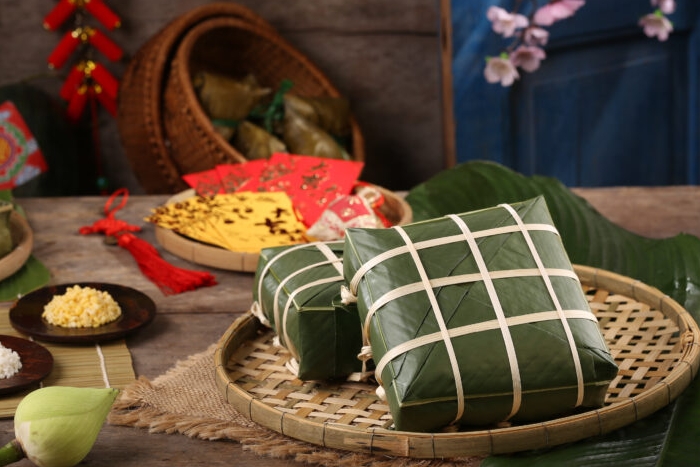
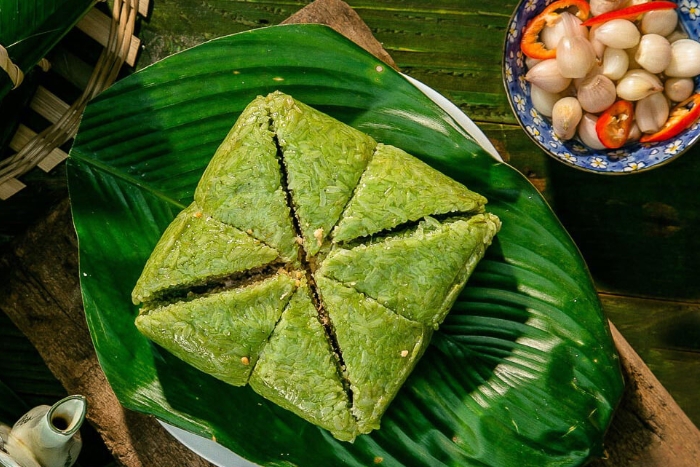
Banh Chung - traditional Vietnamese food for Tet
Chung cake is Vietnamese Tet food with a long history in Vietnamese culinary culture. Therefore, this dish cannot be missing from the Tet feast of Northerners. Its significance reverberates with the gratitude of Prince Lang Lieu towards the 16th Hung King, as well as a reverent homage to the harmonious union between heaven and earth.
The exquisite fusion of glutinous rice, beans, subtle spices, and savory meats orchestrates the unmistakable essence of Tet, encapsulating a delectable and harmonious delight within this well-rounded cake. The anticipation, amidst the Northern populace, of a pot brimming with Chung cake cooking away has become an indelible image ingrained in their subconscious, heralding the arrival of Tet each year.
2. Lean pork paste (Giò lụa)
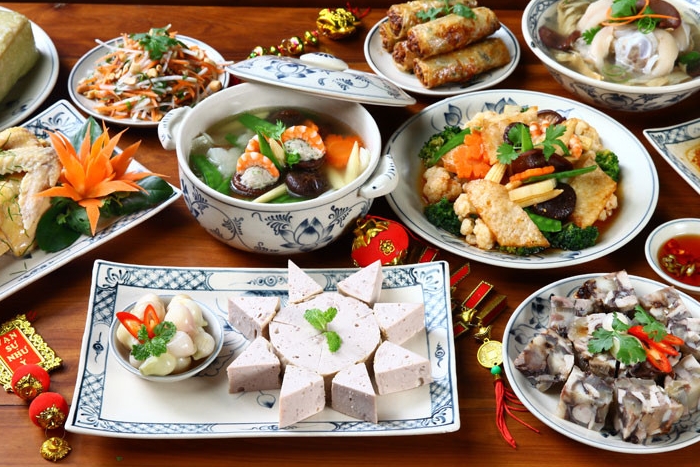
Lean pork paste - an indispensable dish on the Vietnamese Tet tray
A pivotal delight during Vietnamese Tet holiday, lean pork paste stands as an unmissable culinary gem. Crafted from simple yet essential components - lean minced meat harmonized with delectable fish sauce - it is encased in banana leaves and gently boiled to perfection.
Lean pork paste frequently graces Vietnamese dining tables, its presence an indispensable element on Tet dinner trays. These impeccably smooth, crispy, and tantalizing white pork rolls transcend mere culinary delight; they represent a heartfelt offering to cherished family members, intertwining delicious flavors with gestures of love and care.
3. Jellied meat (Thịt đông)
The art of crafting jellied meat involves a meticulous simmering process. Once cooked, the pot of meat is carefully withdrawn from the stove and placed in the yard, tightly enveloped through the night. This ritual allows it to imbibe the ambient elements - the winds, the dew, the cold from both sky and earth - yielding a morning treasure nestled behind our homes: a pot brimming with delectable frozen meat.
Pairing a slice of frozen meat with a tangy pickled onion unveils its enticing essence. The dish's velvety, chilled texture amplifies its allure, presenting an exceptionally alluring culinary experience. This dish stands as a traditional Vietnamese food for Tet, and a quintessentially Vietnamese masterpiece, cherished notably by Northerners for its distinctive character.
You might be interested in: apply evisa Vietnam
4. Boiled chicken (Gà luộc)
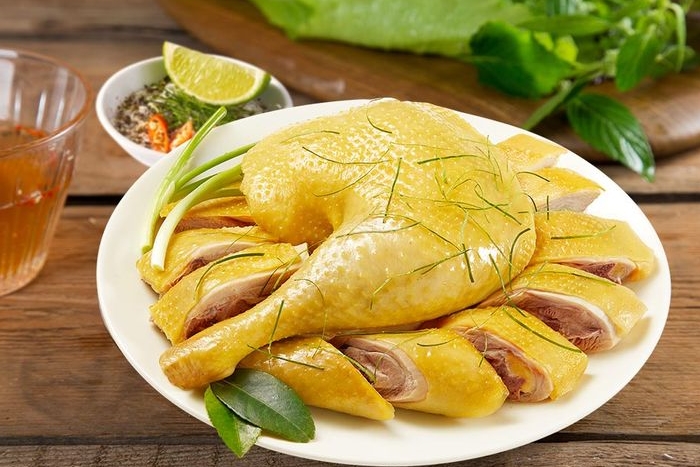
Boiled chicken on Tet holiday
This dish holds an irreplaceable role in Vietnamese traditional Tet festivities, rooted in the belief that chicken heralds luck and auspicious beginnings for the new year. Its significance extends beyond Tet; boiled chicken is a constant presence, gracing feasts ranging from weddings and engagements to birthday celebrations and housewarmings.
The symbolism behind boiled chicken is profound, representing a life abundant with prosperity and fortune. Initiating the new year with the golden hue of this dish is seen as a conduit for an auspicious start, inviting luck and the fulfillment of one's deepest desires for the family.
This might interest you: Vietnam Travel Guide
5. Dried bamboo shoot soup (Canh măng khô)
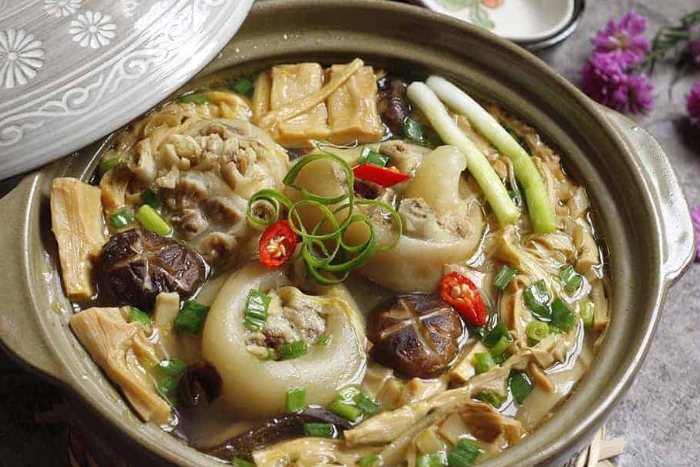
Dried bamboo shoot soup on Tet holiday
Dried bamboo shoot soup simmered with pig's feet stands as Tet Vietnamese food, notably cherished by Northern and Hanoi communities as spring arrives. It embodies a cultural emblem, resonating with age-old Vietnamese customs, emphasizing the consumption of natural, earthy fare like bamboo shoots and potatoes. The beauty of this Tet offering lies not in its complexity of ingredients, but rather in the meticulous harmony it achieves - a blend of dried bamboo shoots and tender pig's feet meticulously prepared to perfection.
This exquisite bowl of bamboo shoot soup harmonizes the earthy fragrance of bamboo shoots with the rich succulence of carefully simmered pig's feet. The soup's inherent sweetness tenderly tempers the piquancy of pickled onions and balances the meat's richness. When savored, the bamboo shoots exude a delicate texture, remaining both soft and crisply delightful, all while retaining their distinct, captivating flavor. This aromatic bowl of soup, adorned with the robust essence of bamboo shoots, captivates hearts and palates alike.
6. Steamed sticky rice ( Xôi )
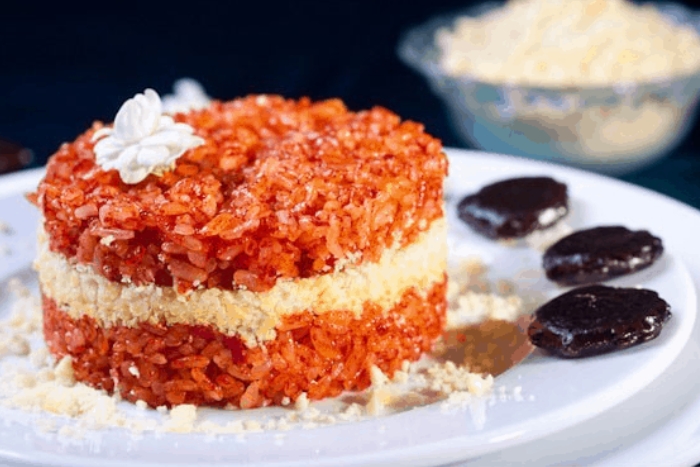
Gac sticky rice on Tet holiday
In the vibrant tapestry of traditional Vietnamese food for Tet, sticky rice holds an esteemed position, gracing celebratory occasions like holidays, New Year festivities, Death Anniversaries, and weddings. Its elemental composition, comprising rice, beans, peanuts, is steamed to perfection - a culinary ritual observed with reverence, especially during Tet.
Gac sticky rice, in particular, enjoys heightened popularity during Tet, revered for its vibrant red hue symbolizing joyous unions and the promise of a luck-laden, felicitous new year. Crafted from luscious sticky rice blended with fresh gac, the concoction is delicately steamed. Once cooked, the sticky rice transforms into a resplendent, alluring shade of bright red, a visual feast unto itself.
A platter laden with Gac sticky rice, offered in ancestral homage during Tet holiday , serves as not just an auspicious token for the year ahead but also embodies the profound spiritual essence intrinsic to the Vietnamese traditional Tet holiday- a testament to the cultural depth and significance embedded within this cherished culinary tradition.
Take a look at the following tour: Vietnam tour 8 days
7. Fried spring rolls (Nem rán)
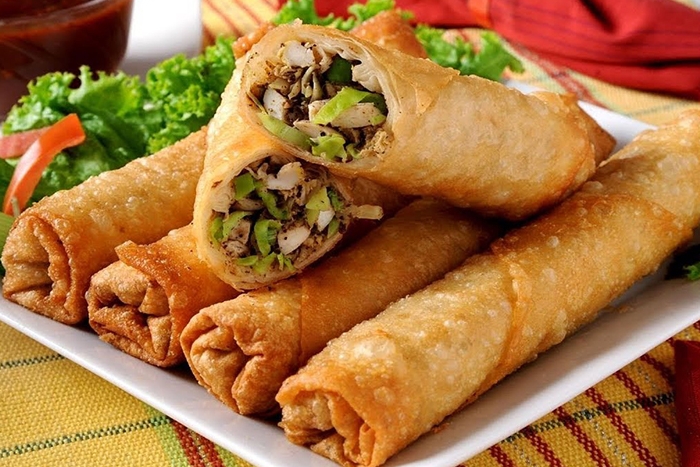
Fried spring rolls on Tet holiday
Within the Tet festivities, fried spring rolls reign supreme as the most sought-after dish. Encased in a lustrous, golden shell, these delicacies are packed with a tantalizing medley of wood ear mushrooms, savory meats, crisp bean sprouts, and verdant green onions. This iconic dish, adorned with its golden hue and bursting with an array of flavors and textures, stands as an indispensable culinary treasure during the Tet holiday in Northern Vietnam.
8. Caramelized pork and eggs ( Thịt kho tàu )
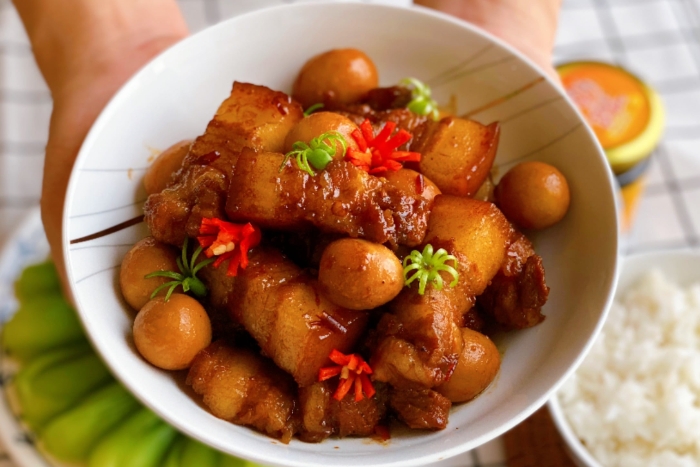
Caramelized pork and eggs
Caramelized pork and eggs , despite its simplicity, has steadfastly held an irreplaceable spot on the Tet holiday across the years. More than just a household delicacy, it embodies a deep-rooted cultural significance within Vietnamese tradition. Beginning with fresh cuts of meat and delicate quail eggs, the artistry of skilled hands transforms these ingredients into a pot brimming with delectable and enticing braised pork, a culinary masterpiece savored by all during Tet. This dish serves not only as a flavorful delight but also as a bearer of enduring cultural heritage and national pride.
Click for more details on: package tours to vietnam
9. Pork stuffed bitter melon soup (Canh khổ qua nhồi thịt)
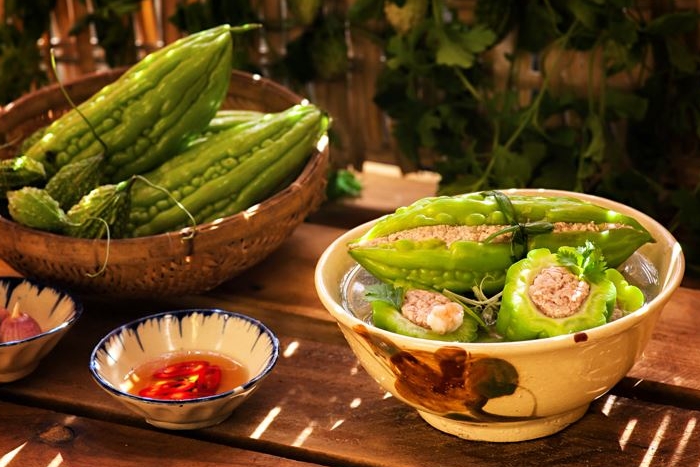
Pork stuffed bitter melon soup
Pork stuffed bitter melon soup holds a familiar place in the daily diet of Vietnamese Tet food gaining significance during Tet as a symbol of overcoming hardships. Beyond symbolism, it offers nourishment, serving as a cooling dish amidst the Tet days. Southerners specifically opt for bitter melon during the New Year's feast, as its name embodies the hope of surpassing challenges, ensuring a smooth and fortuitous year ahead.
A bowl of this soup on the Tet tray invokes a peculiar sense of reassurance -a belief that all hardships will fade away, paving the way for a transformative new year.
10. Pickled onion (Dưa hành)
Pickled onions are an indispensable side dish on Tet holiday
Accompanying the indulgence of fatty meat and Chung cake , pickled onions stand as an essential component of Vietnamese Tet holiday. Crafted through traditional probiotic fermentation methods, this dish exudes a tangy, subtly spicy flavor, often paired with Chung cake or frozen meat for easier digestion.
Crafting delicious pickled onions begins with selecting firm, mature onions. They're prepared by trimming leaves and soaking in an ash water and borax mix for two days and nights. Afterward, the onions are peeled and roots cut before being placed in a container to salt, sugar, and vinegar water, left to cool for several days before reaching the perfect pickle consistency.
In conclusion, above is a summary of the top 10 traditional Vietnamese foods for Tet , each carrying its distinct significance, flavor profile, and symbolism. These culinary treasures aren't merely sustenance; they are embodiments of cultural depth, historical relevance, and familial traditions. Each dish paints a vivid tapestry of flavors, colors, and textures, weaving together stories of heritage, invoking sentiments of joy, prosperity, and auspicious beginnings for the new year. If you want to learn more useful information about travel, please visit the website of Autour Asia, the best travel agency in Vietnam!
Read more:
Autour Asia - agence asia
Que Faire À Pu Luong, Vietnam